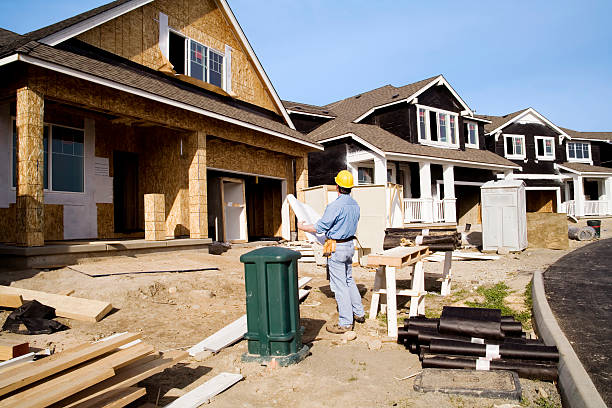
A custom home build starts with a vision — the particular combination of spaces, features, and character that you’ve been thinking about for years. Maybe it’s the open great room that flows to a covered outdoor space. Maybe it’s the primary suite that’s finally sized and designed the way you actually want it. Maybe it’s the dedicated home office that’s a real room, not a corner of the bedroom. These aren’t small wishes — they’re specific, personal ideas about how you want to live, and realizing them requires a residential construction company that can translate vision into physical reality without losing what made it compelling in the first place.
That translation — from idea to built home — is the core of what custom home construction is. And the quality of the result depends entirely on the quality of the partnership between the homeowner and the builder.
How Custom Home Construction Actually Works
The custom home process begins well before ground is broken. Design development, site evaluation, soil investigation, permit application and approval, and financing all happen before a shovel goes in the ground. In California, the permitting process for new residential construction can take several months, and the design needs to be substantially complete before permits can be submitted.
An experienced residential construction company guides clients through this pre-construction phase as actively as they manage the construction itself. They know what information the local building department needs and in what format. They know how to review plans for constructability — catching details that might look fine on paper but present practical challenges during construction. They know how to develop accurate budgets from complete specifications rather than ballpark numbers that create surprises later.
Structural Integrity: The Investment You Don’t See
In custom home construction, there’s a category of work that homeowners rarely think about because it’s invisible in the finished home — foundation systems, structural framing, shear walls, hold-downs, and the engineering that ties it all together. This is the work that determines how the home performs over its lifetime, especially in California’s seismic environment.
A residential construction company that takes structural work seriously doesn’t just meet code minimums — they understand the engineering behind what they’re building and execute it with the care it deserves. Anchor bolts properly set in the foundation. Shear panels correctly nailed to the schedule specified in the structural drawings. Hold-downs properly installed at required locations. These details don’t show up in the finished home, but they determine how the home behaves in an earthquake.
Mechanical Systems: The Systems You Live With
HVAC, plumbing, and electrical are the systems that determine day-to-day living comfort and operational cost. A custom home is an opportunity to get these systems right from the start — proper HVAC sizing based on actual load calculations, not rules of thumb; plumbing layout that makes functional sense rather than just meeting code minimums; electrical systems designed with enough capacity and circuit distribution for how the home will actually be used.
In California, the energy code requirements for new residential construction are substantial, and they push builders toward high-performance mechanical systems. A residential construction company that’s current on Title 24 compliance knows how to meet these requirements in ways that also produce homes that are genuinely comfortable and energy efficient — not just technically compliant.
Selection Process and Allowances
The finish selection process in a custom home is one of the most time-consuming aspects of the project for homeowners. Flooring, tile, countertops, cabinets, fixtures, hardware, paint colors, exterior materials — each decision is its own research and decision-making process, and they all need to be made in time to meet the construction schedule.
Allowances — budget amounts set aside for homeowner-selected items — should be based on realistic cost ranges for what the homeowner actually wants, not low numbers that look good in the budget but produce sticker shock when actual selections are made. Honest allowances are the mark of a builder who wants the project to go well, not just to win the bid.
For homeowners ready to build the home they’ve been planning, Cruz Home Construction is the residential construction company that brings genuine expertise and honest partnership to every custom build.